The First Founders Decks Are Coming Soon -- Don't Miss Your Spot!
Multisensory Approach: Anchoring Phonics Through Sight, Sound, and Touch
INSIDE THE FORGE
3 min read
We've all watched a child pause on a word, thinking it through. The letters are right there. They're familiar. And you can almost see the gears turning in their mind, searching for the sounds.
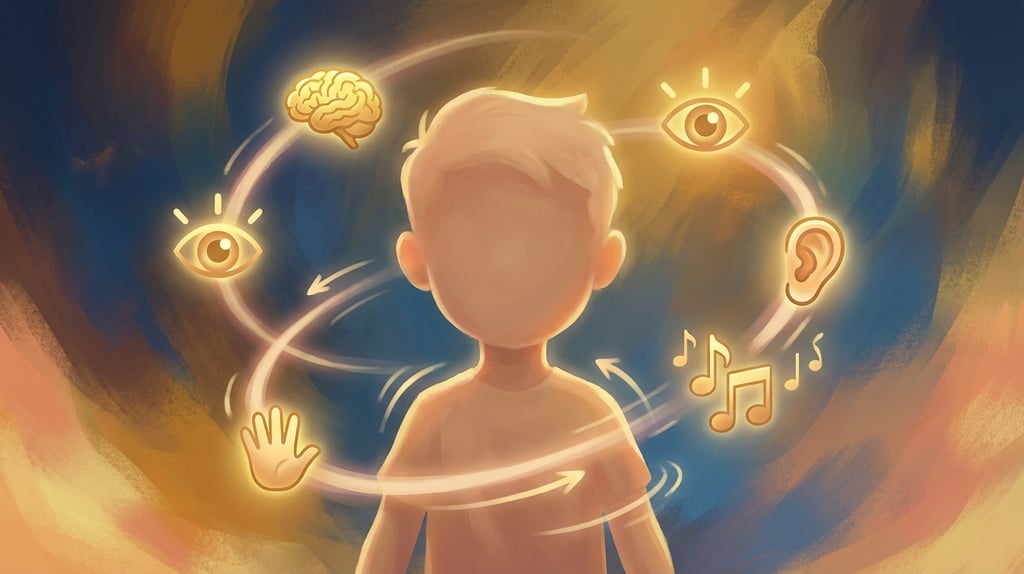
That pause matters because learning to read isn't just a job for the brain. It's a full-body experience. When children see, say, hear, and touch something at the same time, the brain builds stronger, faster connections.
A Picture Inside the Letter? Here's Why That's Brilliant.
It starts with something simple but surprisingly powerful. Instead of a plain letter, kids see a familiar picture built right into the letter shape. That's the idea at the heart of Phonic Forge, a collection of educational mini-games inside a single card deck, built to help kids use all their senses from day one.
Before a child knows a letter's sound, they can recognize the picture. That image acts like the brain's GPS, a shortcut that tells the brain, "Here's where to go." Instead of a child staring at a letter and drawing a blank, their brain has a clear path to follow.
Every time a child plays a card they're:
Seeing the picture inside the letter
Saying the sound out loud
Hearing themselves and their friends say it
Touching and moving the cards as they play
That's four pathways firing at once, from a single card flip. And because the games are social, kids keep hearing and seeing those connections over and over, without it ever feeling like drilling.
Seeing It + Saying It = A Much Stronger Memory
Early reading is really about one thing: understanding how the sounds we speak connect to the letters we see.
When children can see a visual cue at the same time they're hearing and saying a sound, that connection becomes clearer. Phonic Forge bakes this in by putting the picture inside the letter, so the visual isn't an add-on, it's part of the symbol itself.
That means kids aren't just memorizing. They're building a real, meaningful link between what they see, what they say, and what it means. That's the kind of learning that actually lasts.
Wait! Moving Around Helps Them Read?
Yes, really. Movement isn't a distraction from learning. For young kids especially, it is learning.
Here's how it shows up in actual Phonic Forge mini-games:
In Move & Match, kids search the room for a matching cards.
In Stellar Recall, they tap cards in patterns while saying sounds.
In Swipe or Strike, action cards trigger quick physical responses.
And in Fake It to Make It, children tap each card as they say individual sounds, then sweep their hand over the word as they blend—physically acting out the difference between segmented sounds and smooth, connected reading.
When learning is anchored in the body, not just the brain, it sticks in a whole different way.
When Learning Feels Like Play, Practice Happens Naturally
Here's the thing about multisensory learning: it often just looks like play.
Kids aren't thinking, "I'm practicing phonics right now." They're thinking about their turn. The goal. Beating their friend to the card.
And while they're focused on all of that? The repetition is happening naturally. Skills are being reinforced, again and again. That's not an accident. That's by design.
Every Child Wins With This Approach
Not every child needs multisensory instruction to learn to read. But here's the thing, every child benefits from it.
Because when learning engages seeing, hearing, moving, and touching, it becomes:
more accessible
more memorable
more engaging
And most importantly, it builds stronger, faster pathways.
The kind of pathways that support automaticity.
The kind that reduce the load on that brain budget.
The kind that make reading not just possible, but easier. And when reading feels easier? Kids do more of it.
Questions? We're happy to help.
info@graphonicmnemonics.com
© Graphonic Mnemonics LLC | Privacy Policy | Terms & Conditions