The First Founders Decks Are Coming Soon -- Don't Miss Your Spot!
Why Phonic Forge Fits Any Curriculum: The Missing Piece? Practice.
INSIDE THE FORGE
5 min read

You teach your child how to talk.
You teach them how to navigate their world.
You are their first and most important teacher.
So it’s only natural to ask: “How can I help my child learn to read?”
The truth is, you can. Not by replacing what happens in the classroom, but by providing the one thing every school curriculum depends on to succeed: Consistent, joyful practice.
Practice Is the Bridge Between Knowing and Doing
Think of the school curriculum as the map.
In the classroom, your child is introduced to the basics, which letters make which sounds, and how words are built. But knowing the map isn’t the same as driving the route. A child might recognize a sound when it’s pointed out on a board… but for that sound to be useful during real reading, it needs to be easy to find, hold, and use.
That’s where practice comes in. At home, the goal isn’t to reteach the lesson. The goal is to strengthen the pathway. Every time your child practices a letter-to-sound connection, they’re reinforcing the link between:
what they see (the letter)
what they hear (the sound)
At first, that connection can feel slow and effortful, like hiking a rough trail. But with repeated practice, it becomes smoother, faster, and easier to access. That shift is what leads to fluent reading. Not just knowing sounds…
but being able to use them instantly, without stopping to think.
Why This Matters (And What Science Says)
This idea is at the heart of the Science of Reading, a vast body of research built over decades that explains exactly how children learn to read and how we can best support them. Across all that research, one thing is clear: children thrive when they receive explicit, systematic instruction in phonics and foundational skills.
Rather than relying on guessing, fluent reading comes from the ability to look at a word and instantly recognize how its sounds and patterns work together. By helping your child learn how sounds connect to letters and recognizing those patterns through practice, you are helping them build a foundation where reading feels easy.
How Phonic Forge Brings This to Life
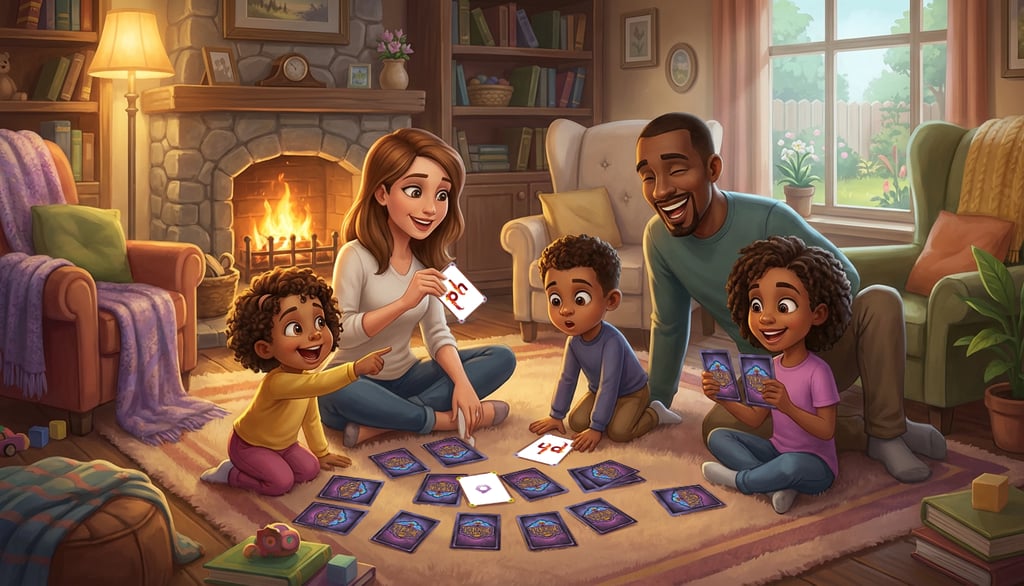
Phonic Forge was designed to bring the science of reading to life through purposeful play. Rather than just looking at letters on a page, children actively engage with them in a structured way that makes abstract concepts feel concrete. Through various games, children learn to sort consonants and vowels, build words using clear patterns, and discover how a single sound change can transform an entire word.
In "Fake It to Make It" game, this process goes even further. Children use their growing understanding of sound categories to build, decode, and manipulate words in real time. This hands-on approach mirrors Orthographic Mapping—the powerful brain process used to store words for quick, automatic recognition. Because this process depends on repeated, meaningful practice, Phonic Forge turns what is often invisible (the sounds and spelling patterns) into something children can actually see and touch.
Modular by Design: A "Supercharger" for School
This is what makes Phonic Forge fit any curriculum. Its modular design means it doesn’t lock you into a rigid sequence. It acts as a supercharger for whatever your child is learning in school:
The Gold Deck reinforces:
A–Z letter sounds
short vowels
early word patterns
These are the foundational phonics skills most children begin building in kindergarten.
The Silver Deck expands into:
less common digraphs
vowel teams
r-controlled vowels
and even the sneaky "e" rule!
Think of Phonic Forge as a customizable toolkit. You can hand-pick the exact cards that match their weekly spelling list, target a specific tricky sound, or just play through the deck to build up general speed.
The Bottom Line: Practice is What Makes Reading Click
Fluent reading isn't built through instruction alone; it is built through the kind of practice that strengthens connections and turns effort into ease. While a school curriculum provides the map for your child’s journey, it is consistent, meaningful practice that actually builds the road.
Questions? We're happy to help.
info@graphonicmnemonics.com
© Graphonic Mnemonics LLC | Privacy Policy | Terms & Conditions